The problem is circular and everyone hits it. Brands hire creators with a portfolio. A portfolio needs content. Content needs products. Products come from brands who hire creators with a portfolio. A portfolio also opens the adjacent routes set out in paid content work more broadly.
The loop breaks in one place: you make the first four clips yourself, with things you already own, and you are honest about it. That is what every working creator did, and it takes a weekend rather than a season of waiting for someone to send free samples. If the job itself is still unclear, start with what a UGC creator does. This assumes you have decided and need something to show.
What a portfolio is actually for
A reviewer spends between forty seconds and two minutes on your portfolio. In that time they are answering three questions, in this order:
- Can this person film something usable? Lighting, framing, audio. This is decided in the first five seconds of the first clip.
- Do they work in our category? A skincare brand watching kitchen gadget clips has to imagine the transfer, and most reviewers will not bother.
- Can they follow a brief? Inferred from whether the clips look like deliberate answers to a spec or like general content.
Everything else — your biography, your follower count, your passion for storytelling — is not being assessed. Build for those three questions and cut the rest.
Pick one category before you film anything
This is the decision that matters most and the one beginners skip.
Four clips in one category reads as a specialist. The same four spread across skincare, tech, pets and fitness reads as somebody trying things out, and it makes the reviewer do the work of imagining you in their category.
Choose based on what you already own and genuinely use, not on which category pays best. You will be talking about these products on camera, and inventing enthusiasm reads badly at close range.
The categories that book most consistently:
- Skincare and beauty. Highest volume of briefs, highest competition. Viable if your filming is genuinely good.
- Kitchen and home. Strong demand, much less crowded. Gadgets, storage, cleaning.
- Pet. Emotional buyers, steady ad spend, chronically underserved by creators.
- Apps and software. Screen recording plus voiceover. No product to buy and no need to be on camera.
- Fitness and supplements. Heavy spend, strict briefs, regulated claims.
- Baby and parenting. Brands pay a premium for creators who genuinely fit, and can tell when someone does not.
The four clips to make
Cover four different formats within your one category. This shows range in the dimension brands care about while keeping the category signal clean.
The hook-led demonstration
Problem stated in the first two seconds, product as the answer. This is the format most paid briefs ask for, so it goes first on the page.
The unboxing or first impression
Lowest paid, most frequently requested. Easy to film and it proves you can do the bread-and-butter work.
The talking-head recommendation
You, to camera, thirty seconds, one clear reason someone should care. Demonstrates that you can carry audio and hold attention without cuts.
The faceless clip
Hands and product only, voiceover on top. This doubles the briefs you are eligible for, and some categories run almost entirely faceless.
Those four cover the formats most paid briefs ask for.
Filming them well enough
The quality bar is lower than most beginners assume and sits almost entirely in two places.
Light
Find the window in your home with the best indirect daylight and note the hours it works. That is your set. Face the light rather than standing in front of it. If you can only film after dark, one soft light around $40 solves it permanently.
Audio
If you speak, use a clip-on microphone. Phone microphones pick up the room, and room noise is the most common reason a technically fine clip gets passed over. This is a $30 purchase that changes your acceptance rate more than any camera would.
Everything else is secondary. Shoot vertical, lock the exposure so it does not hunt mid-take, film three takes and keep the best, and resist editing. Transitions, music beds and animated text make the clip read as an advert, which is precisely what the brand is paying to avoid.
Do not clear the background. A kitchen with a few real things on the counter outperforms a bare white surface, because the entire proposition is that this looks like a person rather than a studio.
Where to host it
The test is whether a reviewer can watch three clips inline, on a phone, in under a minute, without downloading anything.
A one-page site. Best option. Videos embedded and playing in place, your name, your category, the countries you can film in, your rate, and a contact address. Any simple site builder does this, and the whole thing takes an evening.
A dedicated portfolio platform. Fine, and quicker to set up. The trade is that you are one profile among thousands and the presentation is not yours.
A public Notion or similar page. Works, loads fast, looks slightly unfinished to larger brands. Perfectly acceptable early on.
A Google Drive folder. The weakest common choice. It forces the reviewer to open files individually and it signals that you did not spend twenty minutes on presentation.
Whatever you use, make the link short and put it in your email signature, your social bios, and every application.
What goes on the page besides clips
Keep it to what a reviewer needs to decide:
- Category, stated plainly. "UGC creator — kitchen and home."
- Where you are, and where you can film. Country matters, because a great many briefs are geographically restricted.
- Whether you appear on camera, work faceless, or both.
- Languages you can deliver in. Underrated. Multilingual creators are scarce and briefs targeting non-English markets pay better for less competition.
- Turnaround you can commit to. "Delivery within 72 hours" is worth more to a campaign manager than an extra year of experience.
- Your rate, if you want inbound filtered before it reaches you.
- One honest line about the spec work. "These are spec pieces filmed with products I own."
Turning spec into real credits
The portfolio's job ends the moment you have paid work to show. Swap in every clip you are permitted to display, replacing the weakest spec piece each time.
Permission matters here. Some briefs grant the brand exclusive rights, which can restrict you from showing the clip publicly. Ask before you publish, and ask at booking rather than after delivery — a brand that says yes at the start rarely reverses, and one that says no has told you something useful about how they contract.
Where a clip cannot be shown, you can usually still name the category and the format. "Scripted demonstration for a skincare brand, February 2026" carries most of the signal without breaching anything.
After roughly five bookings the portfolio is entirely real work, and at that point the rate you can ask goes up noticeably. Raising it is the whole reason for doing this in order.
What gets a portfolio passed over
Reviewers rarely explain a rejection, so the patterns are worth knowing in advance. These come up constantly.
The first clip is the weakest. Reviewers watch in order and stop early. Whatever you are proudest of goes first, and the unboxing goes third.
Horizontal footage. Everything runs vertical. A landscape clip signals that you have not looked at where this content ends up.
Music over dialogue. A backing track under a talking-head clip makes it sound like an advert and often makes the words harder to follow. Brands add their own audio anyway.
Text animations and transitions. Same problem. The clip is supposed to look like a person filmed it on their phone, and heavy motion graphics undo that in the first second.
Inconsistent quality. Four clips where two are well-lit and two were filmed at 9pm reads worse than three good clips alone. Cut the weak one rather than padding the count.
No category signal. Covered above and worth repeating, because it is the most common single reason a competent portfolio gets no bookings.
A dead link. Test it on a phone, logged out, on mobile data. A surprising share of portfolio links only work for the person who built them.
If you also want brand-side work
Some creators end up selling to brands directly rather than only answering briefs, and the portfolio does slightly different work in that case.
A brand deciding whether to hire you for an ongoing relationship wants evidence you understand performance, not just filming. Two additions help:
Show the variants together. Present three hooks for the same product side by side. It demonstrates that you think in tests rather than in single deliverables, which is how the person with the budget thinks.
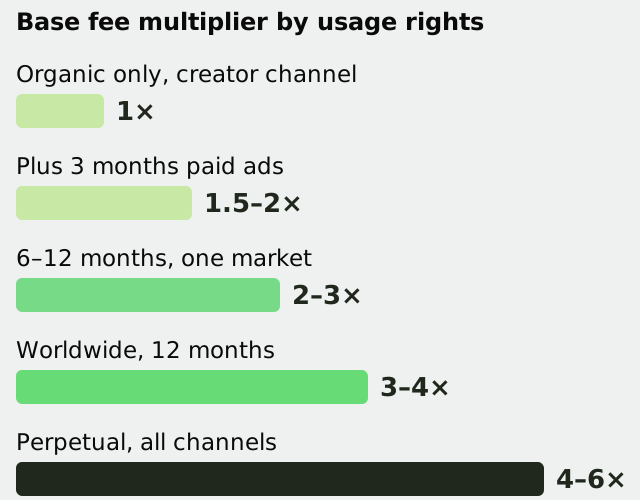
Say what the clip was for. One line under each: the format, the platform it was cut for, and the licence if you can share it. "30-second demonstration, cut for TikTok and Reels, six-month paid usage" tells a buyer more than any adjective.
You do not need results data, and claiming performance numbers you cannot verify is a bad trade. If a client has shared a result and permitted you to reference it, use it. Otherwise describe the work.
Photos, and whether to include them
A reasonable share of briefs ask for stills rather than video: product in a real setting, lifestyle shots, before-and-after sets. It pays less per asset than video and takes far less time, which makes the hourly rate competitive.
If you want that work, add one photo set to the portfolio — five to eight images of a single product, shot in the same natural style as the video. Keep it as one entry rather than scattering images between clips, so the page still reads as a video portfolio with photo capability attached.
Do not include photos if your stills are noticeably weaker than your video. A portfolio is judged on its floor, not its ceiling.
Keeping it alive
A portfolio decays. Formats shift, your filming improves, and a page built eight months ago starts undercutting you.
Set a reminder to look at it every quarter and ask three things. Is the first clip still the strongest one you have? Does every link still play on a phone? Is the rate on the page the rate you actually charge now? Fixing those three takes twenty minutes and they are the ones that quietly cost bookings.
Retire clips rather than accumulating them. Six is the working maximum, and a page of twelve tells a reviewer you could not decide which of your work was good.
The weekend version
If you want the compressed schedule:
Saturday morning
Pick the category, pick three products, watch ten ads in that category and note what happens in the first two seconds of each.
Saturday afternoon
Film all four clips. Three takes each. Do not edit yet.
Sunday morning
Pick the best take of each, trim the top and tail, export vertical. That is the entire edit.
Sunday afternoon
Build the page, write the six lines of information, publish, and send it to ten briefs before the day ends.
The last step is the one people skip.
A portfolio nobody has seen earns exactly as much as no portfolio at all.
The routes into paid UGC work covers where to send it and what each channel pays.