A UGC creator makes content that a brand posts as its own. That is the whole definition, and the part people miss is the second half: the content is not for your audience. You film it, you hand over the file, the company puts it on their TikTok, their paid ads, or their product page.
UGC stands for user-generated content, which is now a misleading name. Genuine user-generated content is what a customer posts unprompted, for free, because they liked something. What brands buy under this label is content produced to look like that, by someone hired to make it. It is a job, not an accident, and treating it as a job is what separates creators who get rebooked from creators who send one application and give up.
Why brands buy it
Polished advertising stopped performing on short-form feeds somewhere around 2021. A clip that looks like an advert gets scrolled past in under a second. A clip that looks like a person holding a product in their kitchen does not. Brands can either wait for real customers to make that content or pay someone to make it on schedule.
They pay someone. It is faster, it is repeatable, and it produces enough variants to test properly. A brand running paid social needs ten to thirty different creative angles a month, and no organic customer base produces that on a deadline. The creative is the variable that decides whether the ad spend works, so the content is not a nice-to-have sitting next to the media budget. It is the thing the media budget is pointed at.
This is also why follower count is irrelevant to the hire.
The brand is not renting your audience. They are buying a video file and a licence to use it.
What the job actually involves
A typical brief arrives with a product, a hook to open on, a list of points to cover, and a length. You film, usually on a phone, usually in your own home. You deliver a raw or lightly edited vertical video. The brand handles posting, captions, and whatever ad spend goes behind it.
A file from someone with 200 followers performs identically to a file from someone with 200,000, because the viewer sees it on the brand's account either way. That is the same reason companies commissioning creators brief on category and format rather than on reach.
The work that separates a paid creator from an unpaid applicant is unglamorous:
- Reading the brief properly. Most rejected submissions fail because they ignored a stated requirement, not because the filming was bad. If the brief says show the label at least once, show the label.
- Lighting. One window or one soft light beats an expensive camera in a dark room. This is the single largest quality difference between amateur and bookable footage.
- Speaking to one person. Not to a crowd. The clip plays on a phone held by one viewer, and presenter energy reads as an advert.
- Turnaround. Brands run campaigns to a calendar. A creator who delivers in three days gets rebooked over one who delivers in ten, even when the ten-day clip is slightly better.
- Taking notes without friction. Revision requests are part of the work. Creators who argue every note stop getting briefs.
What a UGC creator gets paid in 2026
The honest range is wide, because the label covers both a $20 unboxing and a $400 scripted demonstration with usage rights attached.
| Work type | Typical rate |
|---|---|
| Simple unboxing or first-impression clip | $15 – $60 |
| Standard short-form video to brief | $75 – $150 |
| Scripted demonstration, multiple takes | $150 – $300 |
| Video plus paid-ad usage rights | $250 – $500 |
| Bundle of 3–5 variants for ad testing | $300 – $900 |
| Monthly retainer, 8–12 clips | $1,200 – $3,500 |
Two things move a rate more than anything else.
Usage
A clip the brand can only post organically is worth a fraction of one they can put ad spend behind, and for a defined term. If a brand asks for "full rights in perpetuity" at an organic-post rate, that is the negotiation, and it is worth having. Six months of paid usage on one market is a different product from unlimited worldwide use forever.
Variants
A brand testing creative wants five versions of the same idea with different opening hooks. That is a single booking and a single setup rather than five separate negotiations, which makes it better paid per hour for you and cheaper per asset for them. Creators who pitch variant bundles rather than single clips move up the rate table faster than creators who improve their filming.
Of the two, usage moves the number furthest.
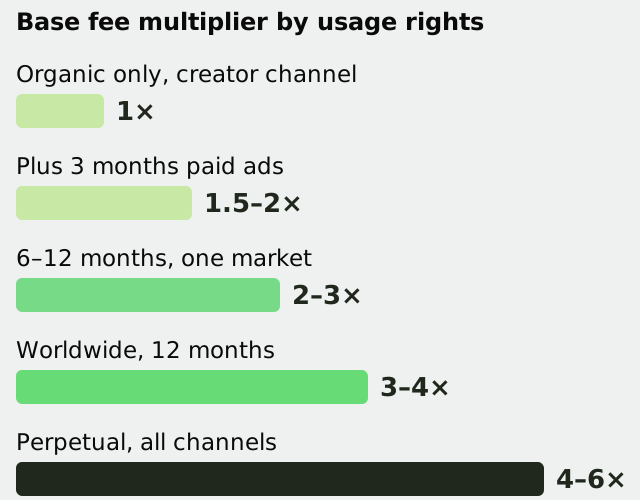
The full rate breakdown by licence works through where each step sits.
What monthly income looks like
Nobody making a living from this is filming one clip a month. Realistic pictures, based on what creators report:
The jump from the first tier to the second is repeat clients rather than better filming. A brand that books you once and likes the result will book you monthly, and re-booking costs them nothing in search time.
UGC creator versus influencer
These get conflated constantly, including by brands writing briefs.
| UGC creator | Influencer | |
|---|---|---|
| What is bought | The content file and its licence | Access to an audience |
| Followers needed | None | The entire proposition |
| Where it is posted | Brand's channels | Creator's channels |
| Priced on | Production and usage rights | Reach and engagement rate |
| Disclosure duty | Brand discloses its own advert | Creator must disclose the partnership |
| Typical deal size | $75 – $500 per asset | $200 – $20,000+ per post |
The confusion is understandable because the same person often does both. They are separate contracts with separate pricing, and conflating them is how creators end up handing over ad usage rights for an organic-post rate. If a brand wants you to post it too, that is an influencer deal on top of the UGC deal, and it is priced separately.
The categories that hire most
Not every product needs this kind of content. The categories that book UGC consistently share one trait: the product is inexpensive, bought on impulse, and improved by seeing a real person hold it.
- Skincare and beauty. The largest category by volume and the most competitive to enter.
- Kitchen and home. Gadgets, storage, cleaning. Strong demand and less crowded than beauty.
- Pet. Loyal buyers, high emotional response, consistently underserved by creators.
- Fitness and supplements. Heavy ad spend, though claims are regulated and briefs are strict.
- Apps and software. Screen recordings with voiceover. Pays well and needs no product shipped.
- Baby and parenting. High trust requirement, so brands pay more for creators who genuinely fit.
Picking one and staying in it beats spreading across four. A portfolio of four clips in one category reads as a specialist. The same four across four categories reads as somebody trying things.
How to start with nothing
You need three or four sample videos before anyone books you, and nobody hands out free product to people with no portfolio.
Make the samples with what you already own
Pick products you actually use, film each clip exactly as if a brand had briefed it, and label them honestly as spec pieces. Every working creator started this way.
Host them for a one-minute watch
Put the samples somewhere a brand can watch them in under a minute. A simple page with embedded videos beats a PDF attachment, and a PDF beats a folder of links. The portfolio in detail covers the ordering.
Apply to many briefs, not a few
Early acceptance rates are low for everyone, and the routes into paid work differ in how fast they answer.
The seven-day starting plan covers the filming and the outreach in order, if you want the practical version.
Where the paid briefs are
Three routes, with different economics.
Marketplaces. Brands post funded briefs and creators apply or reserve a spot. Fastest route in, because the money is committed before you film. Rates sit at the lower end and competition is high on the simplest briefs.
Direct outreach. You find brands running weak paid social in your category and pitch them. Reply rates are low and the ones that reply pay considerably better, because there is no platform in the middle and no other applicant. This is where creators earning a full-time income spend most of their prospecting time.
Agencies. Creative and performance agencies subcontract creator work for their clients. Steady volume once you are on a roster, lower rates than direct, and effectively zero prospecting after the first booking.
When choosing a marketplace, three questions matter more than the headline rate:
- Are the usage rights stated before you commit? If the brief does not say, assume the brand will claim everything.
- Is the campaign funded before you start work? Unfunded briefs mean the platform is passing the payment risk to you.
- What happens if your submission is rejected? A platform where rejection is final and unexplained puts the entire risk of a subjective opinion on the person who did the work.
RentHuman campaigns state the rate, the eligible countries, and the exact proof required before a creator reserves a spot, and the campaign is funded up front so every reserved spot is already covered. Posters get one correction request rather than unlimited revisions, and a rejection opens a 72-hour appeal that an administrator decides. None of that makes the work easier. It does mean the terms are visible before you spend an afternoon filming.
What a brief looks like from the brand's side
Understanding why a brief is written the way it is makes you noticeably better at answering it.
The person commissioning the content is usually a performance marketer, not a brand manager. Their job is measured on cost per acquisition, and creative is the lever with the largest effect on it. They are not looking for a beautiful video. They are looking for an opening two seconds that stops a thumb, followed by enough information to make the click worth it.
That is why briefs specify hooks so precisely, and why they ask for variants. The marketer intends to run five versions, kill four, and put budget behind the survivor. A creator who delivers five genuinely different openings rather than five near-identical takes has made the test work, and that is what gets them rebooked.
It also explains the requirements that seem fussy. Vertical framing with headroom, because the platform crops. Product visible in the first three seconds, because most viewers never reach second five. Captions burned in or left off entirely, depending on whether the brand adds their own. None of these are aesthetic preferences.
Common mistakes that cost bookings
- Over-editing. Transitions, music beds and text animations make the clip read as an advert, which defeats the point of buying it.
- Filming in a tidy studio. A real kitchen with a few things on the counter outperforms a cleared white surface almost every time.
- Ignoring the stated length. A 45-second delivery against a 30-second brief is a rejection, not a bonus.
- Delivering one take. Two or three variants of the hook cost you ten extra minutes and materially raise the chance of a repeat booking.
- Silent delays. Missing a deadline loses one booking. Missing it without telling anyone loses the client.
- Handing over rights by default. If usage is not written down, write to ask. Once the clip is running as a paid advert, the negotiation is over.
Whether it is still worth starting
The bottom of the market is crowded. Anyone can film an unboxing, and enough people do that a $20 brief will draw a hundred applicants within hours.
The middle is not crowded. Creators who pick a category, understand what a performance marketer needs from a hook, deliver several variants of one idea, and hit deadlines are still genuinely scarce. That gap has not closed, and it is where the money in this job has always been.
On the buying side the same work is sold three ways, and what a UGC agency's margin actually covers sets out which parts of it a brand is paying for when it does not commission creators directly.
A related question people arrive at from the other direction is what the profile label itself means, and what a digital creator actually is separates the account setting from the work.